Crossing-the-bridge Noodles
Introduction
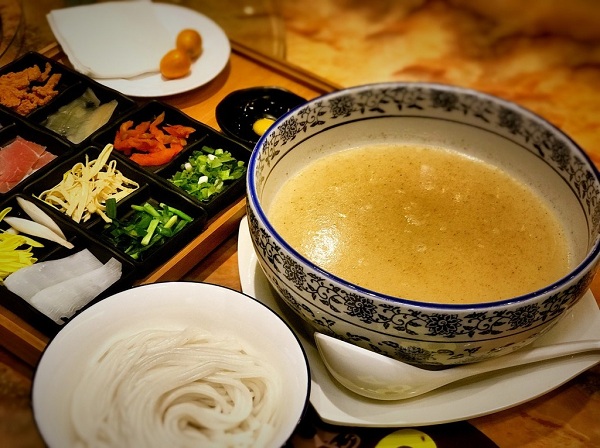
Crossing-the-bridge noodles, a renowned dish from Yunnan province in Southwest China, is a celebrated culinary treasure that has gained national and international recognition. Known for its unique preparation method and rich cultural significance, this dish is a staple of Yunnan's diverse gastronomic heritage. The dish consists of a steaming hot broth, silky rice noodles, and an assortment of fresh ingredients such as thinly sliced meats, vegetables, tofu, quail eggs, and aromatic herbs. The components are served separately, allowing diners to assemble their bowls according to their preferences.
The dish's name, "crossing-the-bridge noodles," originates from a touching legend that highlights devotion and ingenuity. It is said that a scholar preparing for the imperial examination lived in seclusion on an island, and his wife would bring him meals daily. To ensure the food remained warm during the journey, she discovered that covering the hot broth with a layer of oil retained its heat. Upon arrival, she would add fresh ingredients to the broth, creating a warm and nourishing meal for her husband. This story not only gives the dish its name but also encapsulates the deep cultural and emotional connection associated with it.
Crossing-the-bridge noodles is more than just a meal; it is a sensory experience that combines the rich flavors of slow-simmered broth, the delicate texture of rice noodles, and the freshness of locally sourced ingredients. It is a must-try dish for visitors to Yunnan, offering a taste of the province's culinary artistry and cultural heritage. It is widely available in restaurants across Yunnan, particularly in Kunming. Its popularity has also spread beyond Yunnan, making it a representative dish of Chinese cuisine on the global stage.
Preparation Method
The preparation of crossing-the-bridge noodles is a meticulous process that highlights the artistry and attention to detail characteristic of Yunnan cuisine. The dish consists of three main components: the broth, the rice noodles, and the accompanying ingredients. Each element is prepared separately to ensure optimal flavor and texture.
-
The Broth: The broth is the heart of crossing-the-bridge noodles and is typically made by slow-simmering chicken, pork bones, and herbs for several hours. This process extracts the rich flavors and nutrients from the ingredients, resulting in a golden, aromatic liquid. To keep the broth warm, a layer of oil is added on top, which also enhances its richness.
-
The Rice Noodles: The rice noodles used in the dish are made from high-quality rice, which is soaked, ground into a paste, and then steamed to create thin, silky sheets. These sheets are cut into strips to form the noodles. The noodles are prized for their smooth texture and ability to absorb the flavors of the broth.
-
The Ingredients: A variety of fresh ingredients are prepared to accompany the noodles. These typically include thinly sliced raw meats (such as chicken, pork, or fish), fresh vegetables (such as bean sprouts, spinach, and mushrooms), tofu skin, quail eggs, and aromatic herbs like cilantro and green onions. The ingredients are arranged on separate plates or trays for diners to add to the broth.
To serve the dish, the hot broth is brought to the table in a large bowl, followed by the noodles and ingredients. Diners first add the raw meat slices to the broth, allowing them to cook instantly in the hot liquid. Next, the vegetables, tofu, and eggs are added, followed by the rice noodles. The dish is then stirred gently to combine the flavors, creating a harmonious blend of textures and tastes.
Variations
While the traditional version of crossing-the-bridge noodles remains the most popular, there are several variations of the dish that reflect the creativity and diversity of Yunnan cuisine. These variations often incorporate regional ingredients and flavors, offering unique twists on the classic recipe.
-
Seafood Crossing-the-bridge Noodles: In coastal areas or regions with access to fresh seafood, the dish is sometimes prepared with shrimp, fish, or scallops instead of or in addition to the traditional meats. The seafood adds a delicate sweetness to the broth, enhancing its complexity.
-
Vegetarian Crossing-the-bridge Noodles: For those who prefer a plant-based option, vegetarian versions of the dish are available. These typically feature a vegetable-based broth and an assortment of fresh vegetables, tofu, and mushrooms. The use of wild mushrooms, which are abundant in Yunnan, adds a rich umami flavor to the dish.
-
Spicy Crossing-the-bridge Noodles: In regions where spicy food is popular, chili oil or spicy condiments are added to the broth to create a fiery version of the dish. This variation is particularly appealing to those who enjoy bold and intense flavors.
-
Luxury Crossing-the-bridge Noodles: Some high-end restaurants offer a luxurious version of the dish, incorporating premium ingredients such as matsutake mushrooms, abalone, or truffle oil. These additions elevate the dish to a gourmet level, appealing to diners seeking a more indulgent experience.
-
Fusion Crossing-the-bridge Noodles: In recent years, chefs have experimented with fusion versions of the dish, incorporating elements from other cuisines. For example, some variations include the use of Japanese miso in the broth or Italian-style pasta in place of rice noodles. These creative interpretations showcase the versatility of crossing-the-bridge noodles and its ability to adapt to different culinary traditions.
Each variation of crossing-the-bridge noodles offers a unique dining experience, allowing diners to explore the diverse flavors and ingredients of Yunnan cuisine. Despite these variations, the dish's core elements — the rich broth, silky rice noodles, and fresh ingredients — remain consistent, preserving its cultural and culinary significance.








